
Disclosure: This post contains affiliate links. As an Amazon Associate, we earn a small commission from qualifying purchases at no extra cost to you. We only recommend products we truly love and trust.
As someone who is passionate about babies and toddlers, in this article we will explore wireless, wearable breast pumps designed to fit inside a nursing bra. We will discuss their advantages and disadvantages and do our best to answer all of your questions about this topic, helping you better understand these products and choose the option that suits your needs.
Parenting a newborn is one of the most rewarding journeys in life, but it comes with a steep learning curve and constant demands on your time. For breastfeeding mothers, traditional breast pumps can often feel like a ball and chain. Sitting motionless next to a wall outlet for 30 minutes at a time—tangled in silicone tubes, holding heavy plastic bottles, and listening to the monotonous hum of a noisy motor—is exhausting. It steals precious moments from your day and restricts your freedom when you need it most.
Enter the revolution of wearable hands-free breast pumps. Designed to fit entirely inside your standard nursing bra with no external cords, dangling bottles, or wall adapters, these innovative devices allow you to pump milk completely hands-free while living your life. Whether you are typing away at your office desk, preparing meals in the kitchen, driving, or simply playing with your older child, wearable pumps give you your hands—and your independence—back.
In this ultimate 2026 buyer’s guide, we break down everything you need to know about hands-free pumping. We thoroughly test and review the top-rated wearable breast pumps on the market today, evaluating their suction power, noise levels, battery efficiency, and ease of cleaning. Read on to discover which wireless pump will best fit your lifestyle, breast shape, and budget.
Why You Still Need a Wearable Breast Pump (Core Benefits)
If you already own a traditional double-electric hospital-grade pump, you might wonder if investing in a wearable breast pump is truly worth it. The simple answer is: it is a game-changer for your daily sanity, mobility, and physical well-being.
Here is why thousands of mothers consider a wearable pump their single best nursery investment:
Total Mobility and Multitasking: The primary benefit of an in-bra pump is physical freedom. Traditional pumps lock you into one position. A wearable pump lets you move freely around the house, fold laundry, answer emails, care for another toddler, or take a walk outside without pausing your pumping session.
Postural & Ergonomic Relief: Leaning forward for long stretches while supporting bulky pump bottles places immense strain on your neck, shoulders, and lumbar spine. Wearable pumps fit snugly against your torso inside your bra, promoting proper posture and eliminating upper back pain.
Discreetness and Noise Reduction: Modern wearable pumps utilize advanced piezoelectric or ultra-quiet motor technology. Because they slip under your everyday clothing, you can pump in public spaces, during work Zoom calls, or while sitting with guests without feeling exposed or self-conscious.
Reduced Stress Equals Better Letdown: Breastmilk flow is closely linked to oxytocin release, which is hindered by stress and frustration. When you aren’t feeling trapped by cords and equipment, your anxiety drops, often leading to faster letdowns and more efficient milk collection sessions.
👉 Click the link to check the price on Amazon
Comprehensive Reviews: The Top Wearable Breast Pumps of 2026
We have evaluated dozens of models based on suction efficiency, comfort, leak protection, app connectivity, and long-term durability. Below are our detailed reviews of the top contenders.
- Elvie Pump Silent Wearable Breast Pump
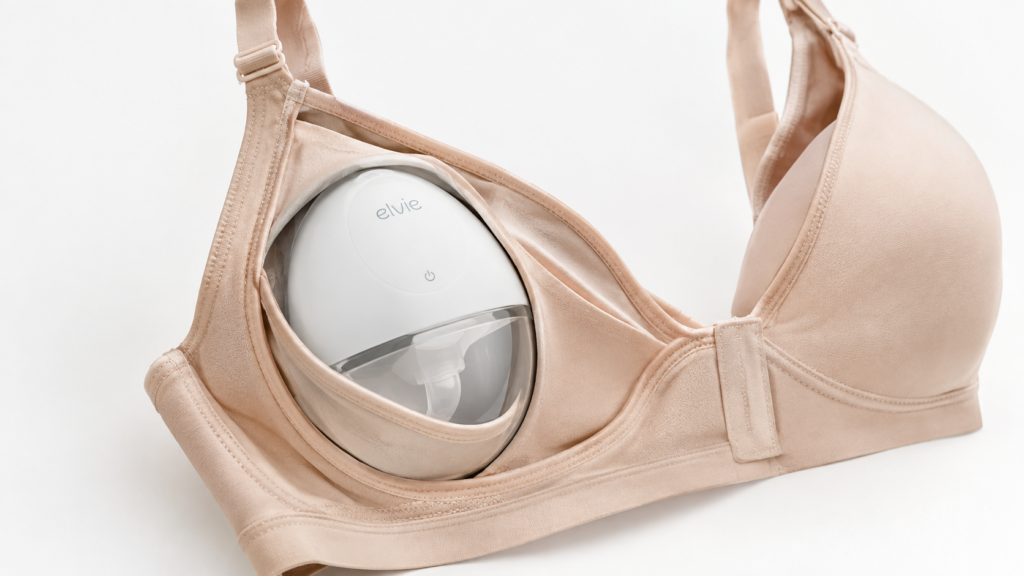
- Primary Feature: Ultra-Quiet Piezoelectric Technology & Sleek In-Bra Profile
Best For: Working professionals and moms who demand total silence, discretion, and high-tech smartphone tracking.
Detailed Review:
The Elvie Pump remains the gold standard for luxury, whisper-quiet wearable technology. Utilizing revolutionary piezoelectric pumps, it substitutes traditional mechanical pistons with tiny micro-vibrations, producing virtually zero operational noise. Slipping smoothly inside any standard nursing bra, the Elvie has an ultra-sleek silhouette that leaves minimal bulge under fitted shirts or blazers.
It pairs seamlessly with the free Elvie app on iOS and Android, allowing you to control suction intensity (across 7 levels), switch between Stimulation and Expression modes, and monitor real-time milk volume through smart sensors built into the reusable 5 oz collection bottles. The pump automatically pauses when it senses the bottle is full, preventing messy overflows. Cleaning is quick and hassle-free, as the entire assembly consists of only five washable parts per side. While it comes at a premium price point, its discretion and build quality are unmatched for mothers returning to the workplace.
Pros & Cons
Pros:
Nearly silent operation—virtually undetectable in quiet offices or meetings.
Smart milk-volume tracking via intuitive smartphone app.
Only 5 parts per side, making assembly and washing incredibly fast.
BPA-free reusable bottles with auto-pause overflow sensors.
Cons:
Higher price point compared to entry-level wearable options.
Suction power (up to 220 mmHg) may feel gentle for mothers accustomed to heavy hospital-grade motors.
👉 Click the link to check the price on Amazon
- Willow Go Wearable Hands-Free Breast Pump
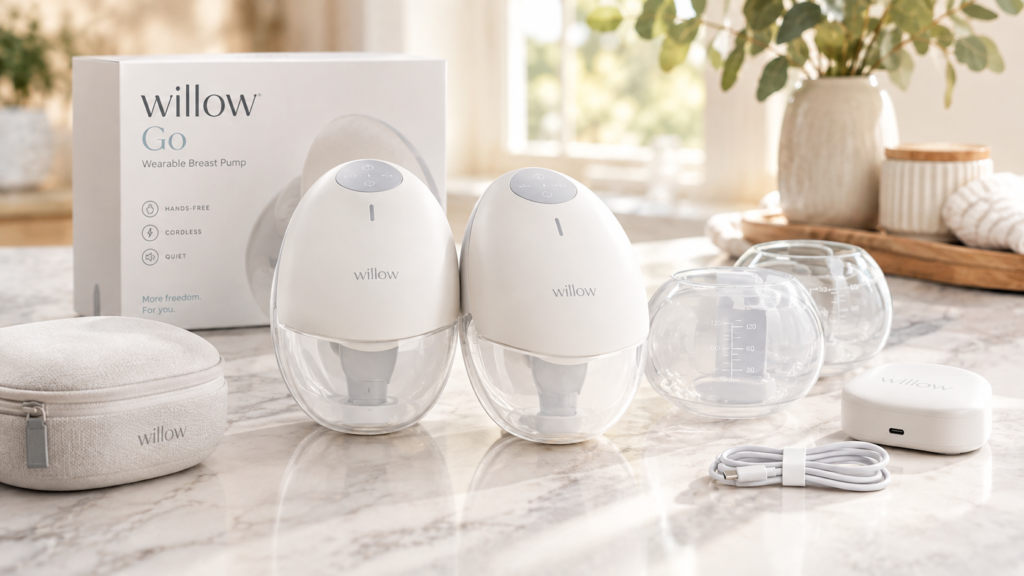
- Primary Feature: Hospital-Grade Suction Power (Up to 280 mmHg) in a Fully Cordless Design
Best For: Mothers who need strong suction and higher milk capacity without sacrificing cordless freedom.
Detailed Review:
If you are worried that a wireless wearable pump won’t empty your breasts as effectively as a traditional wall pump, the Willow Go is designed specifically to erase those doubts. Engineered with powerful internal motors capable of delivering up to 280 mmHg of hospital-grade suction, the Willow Go provides deep, thorough milk expression that rivals full-size tabletop units.
Unlike its sister model (the Willow 3.0, which uses spill-proof bags), the Willow Go utilizes reusable, easy-pour collection cups. It comes standard with 5 oz capacity cups, but offers optional 7 oz capacity cups for high-yield mothers—one of the largest capacities available in the wearable market segment. The unit offers 15 total levels of suction adjustment (6 stimulation levels and 9 expression levels), giving you complete control over your session comfort. The Willow app allows you to start, pause, adjust speed, and track session duration straight from your phone.
Pros & Cons
Pros:
Exceptional hospital-grade suction output (up to 280 mmHg).
Available 7 oz cup upgrade for mothers with larger milk yields.
Affordable replacement parts and wide compatibility with standard nursing bras.
15 customizable suction levels for personalized comfort.
Cons:
Slightly bulkier profile under clothing compared to the Elvie.
Motor sound is audible in completely quiet rooms.
👉 Click the link to check the price on Amazon
- Momcozy M5 Wearable Breast Pump (“Baby Mouth” Design)
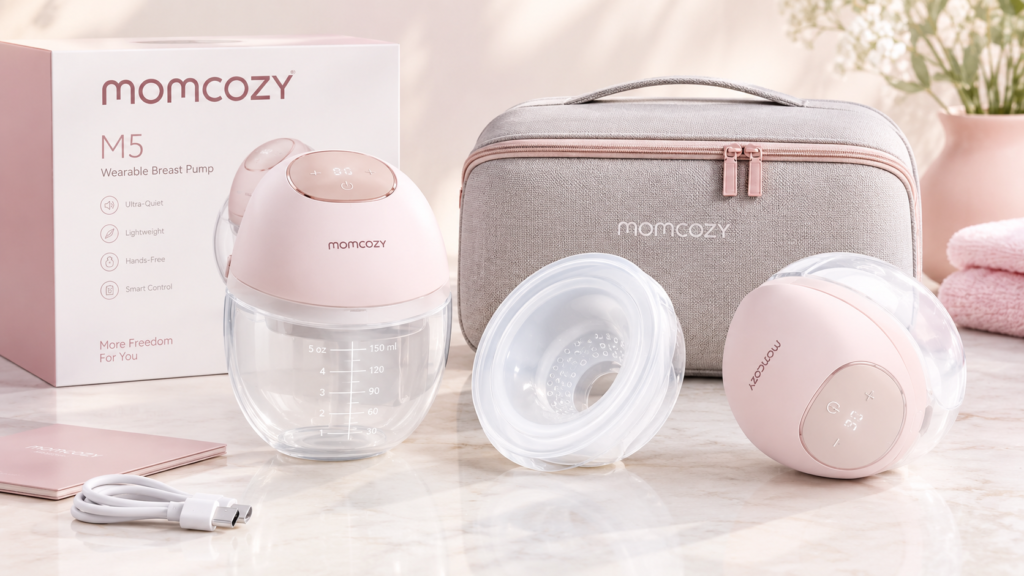
- Primary Feature: Double-Sealed Flange & Micro-Vibration “Baby Mouth” Flange Angle
Best For: Budget-conscious mothers seeking maximum nipple comfort, gentle extraction, and complete all-in-one accessories.
Detailed Review:
Momcozy has taken the wearable pumping world by storm, and the M5 model represents their most refined iteration yet. Designed around the concept of imitating a baby’s natural latch angle (105-degree fluid curve), the “Baby Mouth” double-sealed silicone flange exerts horizontal pressure while vibrating gently during extraction. This drastically reduces nipple friction, making it an ideal choice for mothers suffering from sore nipples or vasospasms.
The M5 features a compact, light motor unit that sits flush against the cup, reducing top-heavy tilt. It includes 3 pumping modes (Stimulation, Expression, and Mixed/Bionic Mode) across 9 adjustable suction intensity levels. A major highlight is the included hard-shell travel handbag and comprehensive flange insert sizes (17mm, 19mm, 21mm, and 24mm) right inside the box, saving you from spending extra money on fitting adapters.
Pros & Cons
Pros:
Extremely comfortable double-sealed silicone flanges that minimize nipple soreness.
Includes multiple insert sizes (17-24mm) and a hard travel case in the box.
Excellent value-for-money pricing without compromising performance.
Compact motor weight prevents the pump from slipping downward in your bra.
Cons:
No smartphone app connectivity (controlled via LED buttons on top of motor).
Battery life averages 4-5 sessions per full charge (slightly lower than competitors).
👉 Click the link to check the price on Amazon
- Medela Freestyle Hands-Free Wearable Breast Pump
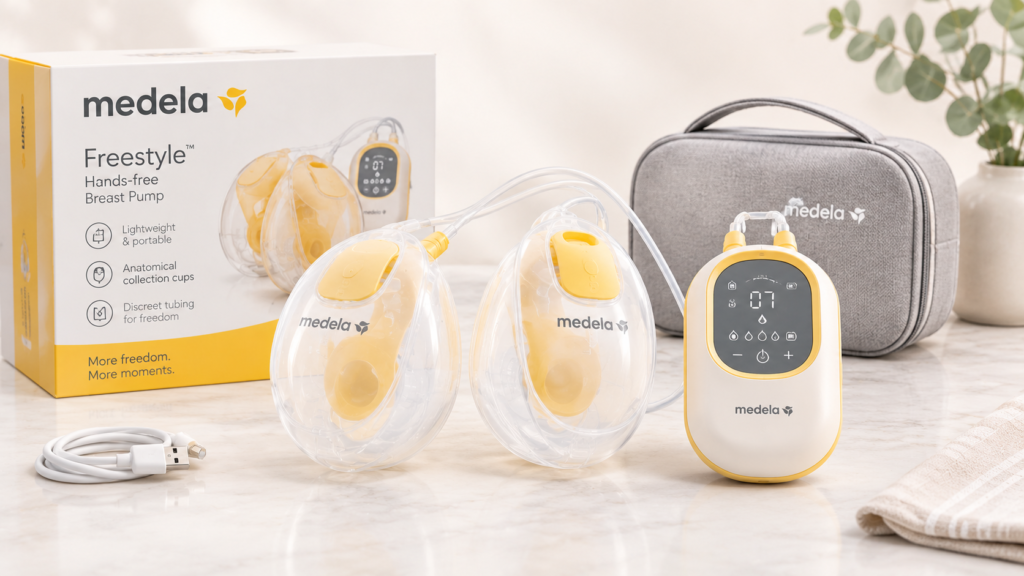
- Primary Feature: Ultra-Lightweight Collection Cups (76g per cup) with Anatomical 105° Flange Design
Best For: Brand-loyal mothers who want trusted Medela extraction technology combined with featherlight in-bra comfort.
Detailed Review:
Medela’s entry into the wearable space takes a unique hybrid approach. Instead of placing heavy motor blocks directly inside your bra, the Medela Freestyle connects ultra-lightweight collection cups—weighing a mere 76 grams each—via short, discrete tubing to a pocket-sized motor unit. This completely eliminates front-heavy breast sagging and ensures the cups remain flush and secure inside almost any soft bra.
The collection cups feature Medela’s research-backed 105-degree angled flanges, designed to reduce pressure on sensitive breast tissue and milk ducts compared to standard 90-degree flanges. The pump utilizes 2-Phase Expression technology, mimicking a baby’s natural suckling rhythm for rapid letdowns. Cleaning is exceptionally easy because each cup consists of only three dishwasher-safe parts. The intuitive touchscreen motor includes a built-in rechargeable battery and syncs with the Medela Family app to record sessions automatically.
Pros & Cons
Pros:
Incredibly lightweight cups (76g) that won’t pull your nursing bra down.
Only 3 parts per cup to wash, dramatically reducing cleanup time.
Anatomical 105° flange design improves comfort and milk flow rate.
Transparent cup walls make nipple alignment effortless.
Cons:
Uses thin connecting tubes, making it slightly less hidden than totally tubing-free pumps.
Separate motor unit requires placement in a pocket or on a waistband clip.
👉 Click the link to check the price on Amazon
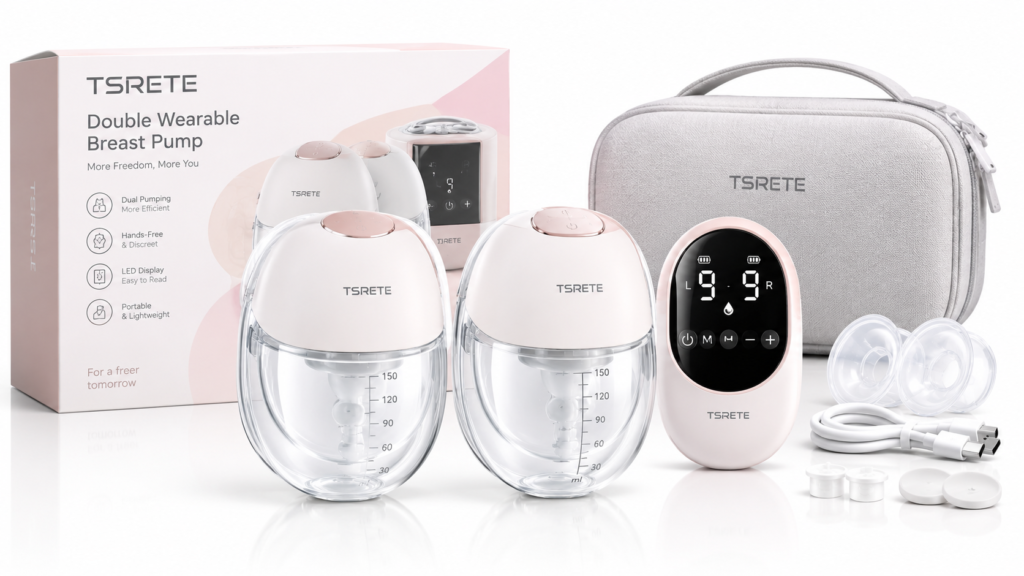
- TSRETE Double Wearable Breast Pump
- Primary Feature: HD LED Display Screen & Memory Function at an Entry-Level Price Point
Best For: Mothers seeking a feature-packed, budget-conscious wearable pump for everyday casual use.
Detailed Review:
The TSRETE Wearable Pump proves that you do not need to spend hundreds of dollars to enjoy hands-free pumping freedom. Engineered with an upgraded high-definition LED screen directly on top of the motor block, it gives mothers instant visibility over pumping duration, suction level, and battery status—even in dim nighttime conditions.
It features 9 suction levels across 2 core modes (Expression and Massage) and incorporates an intelligent memory function that automatically starts your session at your previously preferred settings. Built using food-grade, BPA-free soft silicone, the flanges create a comfortable seal against the skin to prevent unexpected milk leaks. While its sound level is slightly higher than luxury competitors like Elvie, its impressive suction power and rich feature set make it one of the best value-for-money options on Amazon.
Pros & Cons
Pros:
Exceptional budget-friendly value for a complete dual-pump set.
Clear LED screen displays timer, suction level, and battery life.
Automatic memory function recalls your ideal custom settings.
Includes 24mm flanges along with 21mm silicone inserts.
Cons:
Slightly louder motor hum compared to premium piezoelectric models.
Bulkier silhouette under clothing.
👉 Click the link to check the price on Amazon
Comprehensive Buyer’s Guide: How to Choose the Perfect Wearable Pump
Selecting the right wearable breast pump isn’t just about brand reputation; it’s about matching a pump’s mechanical specs to your unique body and daily routines. Consider these essential factors before making your final decision:
- Flange Fit and Nipple Sizing
The single most critical factor in pumping efficiency and pain prevention is proper flange size. Wearing a flange that is too large or too small can lead to tissue trauma, clogged ducts, and severely diminished milk output. Always measure your nipple base diameter (excluding the areola) in millimeters before purchasing. Look for pumps that include multiple insert sizes (such as 17mm, 19mm, 21mm, and 24mm) inside the box. - Suction Strength and Rhythm Modes
Every mother responds differently to suction pressure. Standard hospital-grade traditional pumps yield around 250 to 300 mmHg of pressure. Premium wearables like the Willow Go match this range (280 mmHg), making them ideal for primary pumpers or mothers with slower letdowns. If you have tender nipples, prioritize gentle micro-vibration models like the Elvie or Momcozy M5. - Bottle Capacity and Pouring Mechanics
Consider your average milk production per pumping session. Standard wearable cups hold between 4 oz to 5 oz per side. If you are an over-producer, search for pumps with expandable 7 oz collection options (like the Willow Go) or models with quick-pour spouts that allow you to empty the cups into storage bags mid-session without removing the entire motor from your bra. - Battery Life and Charging Velocity
If you pump frequently on the go or during long workplace shifts, battery reliability is paramount. Look for pumps that offer at least 120 to 180 minutes of total continuous runtime (roughly 4 to 6 full sessions) per charge, and ensure the unit utilizes modern USB-C fast charging so you can top up power easily using your phone charger or laptop port.
Pro Tips & Hacks for Maximum Wearable Pumping Efficiency
Invest in Stretchy, Full-Coverage Bras: Wearable pumps require firm, consistent pressure against your chest wall to maintain a airtight seal. Ditch flimsy unsupportive bralettes and opt for structured, full-coverage nursing bras with adjustable shoulder straps.
Lubricate Your Flanges: Apply a tiny drop of organic coconut oil or nipple balm inside the flange tunnel before starting your session. This drastically reduces skin friction, prevents nipple chafing, and improves seal adhesion.
The Pitch-Forward Removal Technique: To avoid dropping precious milk when removing your pump, lean forward slightly at a 45-degree angle when unclipping your bra. This forces remaining milk droplets inside the tunnel to drain backward into the collection container rather than spilling onto your clothing.
Warmth and Massage First: Apply a warm compress or massage your breasts for two minutes prior to slipping the pumps into your bra. Pre-warming breast tissue stimulates oxytocin release, initiating faster letdowns and boosting overall yield per session.
Frequently Asked Questions (FAQs)
Are wearable breast pumps as effective as traditional hospital-grade wall pumps?
Yes, modern wearable pumps have closed the performance gap significantly. Premium models like the Willow Go and Momcozy M5 now offer hospital-grade suction (reaching up to 280 mmHg), which is more than enough to effectively empty the breasts for the vast majority of mothers. While some exclusive pumpers prefer to use a heavy-duty wall pump for their first morning session when milk volume is highest, a high-quality wearable pump is perfectly capable of maintaining your milk supply for everyday use.
Can I bend over, clean, or lay down while wearing a hands-free pump?
Most wearable breast pumps are highly spill-resistant, allowing you to walk, type, and do light chores comfortably. However, because most models collect milk in reusable cups with small pouring spouts at the top, bending completely over (like picking a toy off the floor) or laying flat in bed can cause milk to leak out of the flange tunnel. It is best to maintain an upright posture. If you require 360-degree, leak-proof mobility, look for specific models that pump directly into sealed disposable bags rather than reusable cups.
How often do I need to replace the silicone parts on my wearable pump?
To maintain maximum suction power and ensure hygiene, it is highly recommended to replace the soft silicone components—specifically the duckbill valves, backflow protectors (diaphragms), and flange inserts—every 1 to 3 months, depending on how frequently you pump. Worn-out, stretched silicone valves are the number one cause of sudden suction loss in wearable pumps.
Do wearable breast pumps fit inside regular everyday bras?
While they can fit inside standard bras, they perform best when paired with full-coverage, stretchy nursing bras. A wearable pump adds extra volume to your chest and requires consistent, firm pressure to maintain a secure, airtight seal against your skin. Stretchy nursing bras without underwires easily adapt to the pump’s shape while holding it tightly in place, preventing the unit from shifting and losing suction while you move.
Conclusion: Embrace Your Freedom and Protect Your Peace
Motherhood is a beautiful, demanding full-time job, and you deserve tools that make your daily routine easier, not harder. Investing in a wearable hands-free breast pump is no longer just a luxury; it is a vital investment in your mental health, your physical comfort, and your overall breastfeeding journey. By cutting the literal cords that tie you to a wall, you reclaim precious hours of your day to work, bond with your baby, or simply enjoy a well-deserved cup of hot coffee with both hands free.
Whether you opt for the whisper-quiet discretion of the Elvie, the hospital-grade power of the Willow Go, or the budget-friendly ergonomic comfort of the Momcozy M5, the right choice ultimately depends on your unique lifestyle and daily demands.
Take a moment to evaluate your daily routine, choose the pump that best aligns with your needs, and take back your freedom today. You are doing an incredible job—make sure you have the right gear supporting you every step of the way!
👉 Click the link to check the price on Amazon
Now, I hope you can choose the product that best suits your needs and those of your little one. I also hope I have answered your questions and provided you with useful information. Thank you for taking the time to read our article!