
When bringing a newborn home, every detail of their care matters—from feeding schedules to sleep environments. Among the most common yet overlooked parental concerns during the first few months is Flat Head Syndrome (scientifically known as positional plagiocephaly). Because infants spend the majority of their early months sleeping on their backs to reduce the risk of Sudden Infant Death Syndrome (SIDS), constant pressure on the soft, pliable bones of their skull can sometimes lead to noticeable flat spots.
Fortunately, modern infant care offers practical preventive solutions, including specially designed ergonomic head-shaping pillows and positioning supports. In this comprehensive guide, we analyze the causes of positional plagiocephaly, essential pediatric safe sleep rules, key features to look for in a baby pillow, and top-rated anti-flat head pillow recommendations.
As someone deeply passionate about the world of babies and toddlers, in this article, we are going to explore an essential product, its different types, and how to choose the best one for your little ones. I will also highlight its pros and cons for your children, and I’ll do my absolute best to answer the questions you as parents are thinking about.
What is Flat Head Syndrome (Plagiocephaly)?
Positional plagiocephaly occurs when an infant’s soft skull flattens on one side or across the back due to prolonged, repetitive pressure on a single surface. Newborn skulls are exceptionally delicate and malleable to allow for rapid brain growth during the first year of life. When babies spend extended hours lying flat in cribs, bouncers, or car seats without shifting position, the underlying bone flattens out. While positional plagiocephaly does not affect brain development or cause cognitive issues, early intervention and preventive care help ensure a well-rounded, natural head shape.
The Main Types of Head Flattening
Plagiocephaly: Asymmetrical flattening on one side of the back of the head. This often causes the ear or forehead on the affected side to shift slightly forward.
Brachycephaly: A wide, symmetrical flattening across the entire back of the infant’s skull, causing the head to appear broader from front to back.
Scaphocephaly: A long, narrow head shape caused by flattening on both sides of the skull, most commonly seen in premature infants.
👉 Click the link to check the price on Amazon
Detailed Product Reviews
- Babymoov Lovenest Ergonomic Baby Pillow
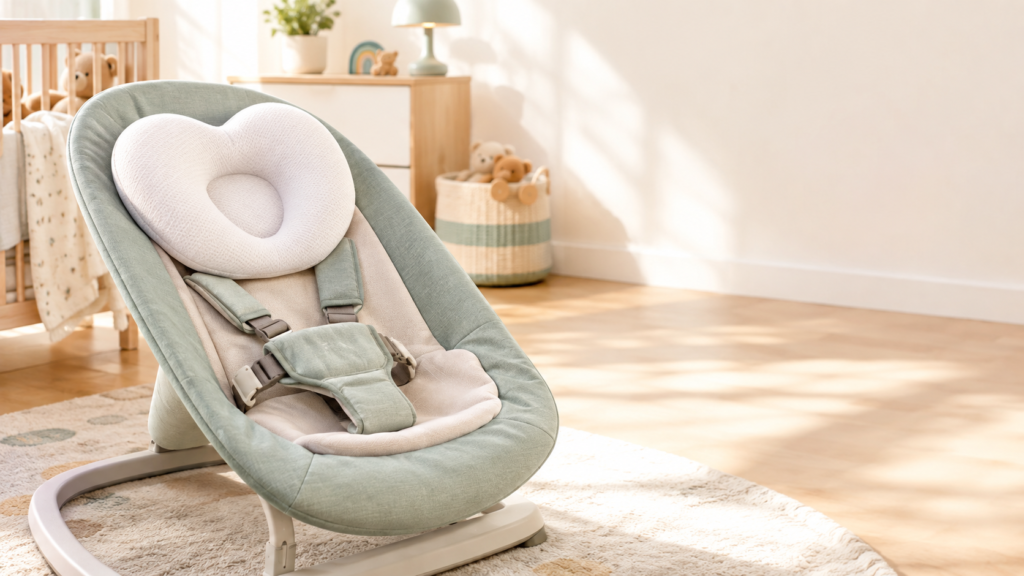
- Primary Feature: Pediatrically designed heart-shaped contour with a central indentation for balanced pressure distribution.
Best For: Newborns up to 4 months old needing targeted head-shape support during supervised lounging and stroller rides.
Detailed Review:
Co-created by a French pediatrician, the Babymoov Lovenest is widely recognized as one of the most effective preventive baby head supports on the market. Its unique heart shape is specially engineered with a sculpted central recess that cradles the back of your baby’s head, distributing pressure evenly across the skull rather than concentrating it on a single flat spot.
Crafted from breathable, soft cotton jersey fabric, the Lovenest keeps your infant cool and comfortable. Its slim profile fits seamlessly into strollers, bouncers, and baby swings without compromising natural neck alignment or elevation.
Pros:
Designed by a pediatrician to effectively prevent and correct mild flat spots.
Universal size fits easily into bouncers, swings, and strollers.
Breathable cotton fabric prevents overheating around the head and neck.
Machine-washable cover simplifies daily hygiene and maintenance.
Cons:
Designed primarily for newborns aged 0 to 4 months; larger infants outgrow it quickly.
Not intended for unsupervised nighttime sleep in cribs.
👉 Click the link to check the price on Amazon
- Welnessa Ergonomic Baby Head Shaping Pillow
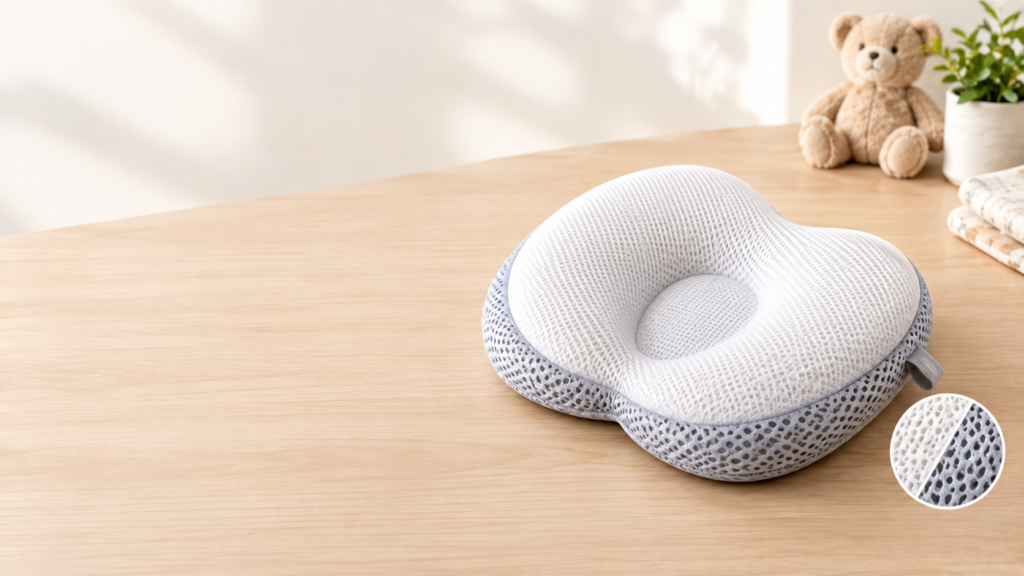
- Primary Feature: Premium memory foam core with breathable 3D air mesh cooling cover.
Best For: Parents seeking high-density memory foam support for daytime nap supervision and bouncer comfort.
Detailed Review:
The Welnessa Baby Shaping Pillow utilizes high-grade, slow-rebound memory foam to offer superior cushioning against hard surfaces. Standard flat surfaces exert direct resistance on a baby’s soft skull, whereas memory foam gently conforms to the natural curve of the head, minimizing pressure points significantly.
Equipped with a dual-sided cover—soft organic cotton on one side and breathable 3D mesh on the reverse—this pillow regulates temperature during warm weather. The center indentation cradles the skull while subtle side contours gently encourage central head positioning.
Pros:
High-density memory foam provides long-lasting pressure relief.
Reversible cover featuring organic cotton and breathable 3D mesh.
Wide, flat base prevents shifting inside strollers or playards.
Includes a removable, washable protective pillowcase.
Cons:
Memory foam core cannot be submerged in water (spot clean only).
Slightly thicker profile requires careful placement to ensure flat neck alignment.
👉 Click the link to check the price on Amazon
- John N Tree Organic Cotton Baby Head Shaping Pillow
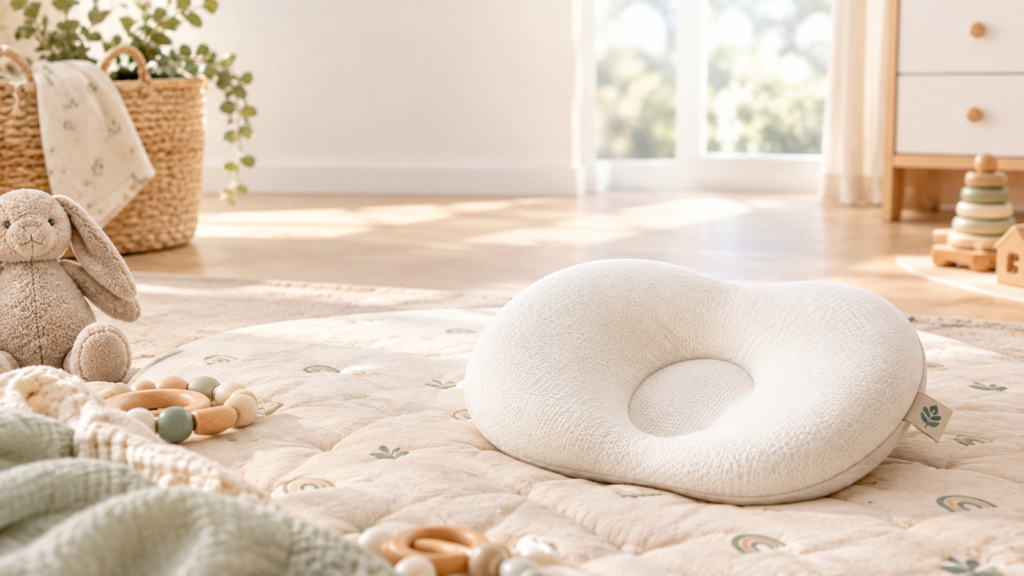
- Primary Feature: 100% Certified Organic GOTS Cotton construction with natural hypoallergenic filling.
Best For: Infants with sensitive skin or allergies requiring all-natural, chemical-free materials.
Detailed Review:
For eco-conscious parents, the John N Tree Organic Baby Pillow offers an all-natural solution to head-shape preservation. Made from 100% GOTS-certified organic cotton, this pillow is completely free from synthetic dyes, flame retardants, and harsh chemicals, making it ideal for delicate newborn skin prone to eczema or irritation.
The pillow features a seamless center indentation surrounded by plush organic fiber fill. This design gently holds the head in a neutral position while offering soft, resilient cushioning whether your baby is lying on an activity mat, in a stroller, or during supervised awake time.
Pros:
100% GOTS certified organic cotton without synthetic treatments.
Hypoallergenic and highly gentle on eczema-prone skin.
Cute animal-inspired aesthetic with functional central contouring.
Fully machine washable on gentle cycle.
Cons:
Cotton filling may flatten slightly faster over time compared to memory foam.
Requires flat air drying to maintain structural shape.
👉 Click the link to check the price on Amazon
- Boppy Newborn Head Hugger Support

- Primary Feature: Dual-ring contoured design providing both head and neck support for travel gear.
Best For: Keeping baby’s head stabilized in car seats, strollers, and bouncers during travel.
Detailed Review:
The Boppy Newborn Head Hugger is engineered specifically for travel equipment where bumpy rides and vibrations can cause a baby’s head to slump or press unevenly against rigid seat backings. Featuring a two-piece nested design, it provides tailored support for both tiny newborns and growing infants.
The contoured outer ring supports the neck and shoulders, while the cushioned inner ring cradles the head to prevent localized pressure spots. As your child grows, the inner ring can be detached, offering extended utility across multiple travel accessories.
Pros:
Modular two-piece design grows with your infant from newborn to toddler stages.
Prevents head slumping in car seats, strollers, and bouncers.
Soft plush fabric provides maximum comfort during long drives.
Crash-tested and approved for select travel equipment compatibility.
Cons:
Bulkier design may make warm-weather travel a bit hot.
Must be adjusted carefully to avoid interfering with harness straps.
👉 Click the link to check the price on Amazon
Buyer’s Guide: What to Look for in an Anti-Flat Head Baby Pillow
Selecting the ideal ergonomic head support for your infant involves more than choosing a soft fabric or a charming design. Because a newborn’s cranial bones remain exceptionally soft and pliable during the first six months of life, choosing a pillow specifically engineered for pressure relief and anatomical safety is crucial. Consider the following key factors before making a final decision.
Ergonomic Central Recess and Pressure Distribution
The core function of an anti-flat head pillow is to distribute weight evenly across the back of the skull. Standard flat mattresses exert direct upward resistance against the delicate occipital bone, accelerating positional flattening. Look for pillows designed with a sculpted central indentation or contoured donut hole. This geometric recess allows the rounded shape of your baby’s head to rest naturally while transferring localized pressure away from the skull and distributing it toward the neck and shoulders.
Breathability and Thermal Regulation
Infants possess immature thermoregulation systems, making them prone to sweating around the head and neck during rest. Trapped heat and excess moisture cause discomfort, skin irritation, and heat rashes. Prioritize pillows constructed with 3D air mesh technology, breathable organic cotton jersey, or open-cell memory foam. These advanced textiles allow continuous air circulation, keeping your infant cool, dry, and comfortable.
Hypoallergenic and Non-Toxic Certifications
A newborn’s skin barrier is thin and sensitive to synthetic chemicals, dyes, and flame retardants. Ensure the pillow materials are certified non-toxic and hypoallergenic. Look for independent safety labels such as GOTS (Global Organic Textile Standard) for cotton fabrics or Oeko-Tex Standard 100 certification. These credentials guarantee that the pillow resting directly against your infant’s face is entirely free from harmful Volatile Organic Compounds (VOCs), heavy metals, and irritating pesticides.
Washability and Maintenance
Infant products inevitably collect drool, milk spit-up, and sweat. Maintaining a pristine sleep environment is essential to prevent bacterial growth and skin breakouts. Choose pillows that come with removable, machine-washable outer covers, or whole-pillow designs that can be safely laundered on a gentle cycle without losing structural shape.
Pro Tips for Parents: Pediatric Safety and Prevention Strategies
While ergonomic head-shaping pillows offer valuable support during supervised lounging, managing positional plagiocephaly effectively requires a dynamic, comprehensive routine. Pediatric physical therapists recommend combining supportive gear with active daily positioning habits.
Prioritize Daily Supervised Tummy Time
Tummy time is the most effective natural countermeasure against flat spots. Placing your infant on their stomach while awake and supervised eliminates all direct pressure from the back of the skull while strengthening vital neck, shoulder, and core muscles. Begin with short sessions of 2 to 3 minutes, 3 to 4 times per day, starting in the first week after birth. Gradually build up to 30 to 60 total minutes per day as your baby grows stronger.
The 180-Degree Crib Rotation Hack
Infants are naturally attracted to light sources, windows, and nursery doors. If a baby always turns their head to the right to look toward the bedroom door, they will develop a flattened spot on that side. To correct this without waking your baby, alternate which end of the crib you place their feet at each night. Switching their orientation forces them to turn their neck in the opposite direction to view the room’s main focal points.
Reduce Prolonged Container Time
Infant containers—such as car seats, bouncers, swings, and strollers—keep a baby’s head resting against semi-rigid padding in a fixed position. Excessive time spent in these seats restricts natural neck movement and concentrates pressure on the skull. Reserve car seats strictly for travel, and transition your baby to floor play mats, baby carriers, or lap holding during awake hours.
Strict Adherence to Safe Sleep Guidelines
It is vital to distinguish between supervised daytime resting and unsupervised overnight sleep. According to the American Academy of Pediatrics (AAP) safe sleep recommendations, an infant’s crib or bassinet must remain completely clear of soft objects, loose blankets, and unattached pillows during unsupervised sleep under 12 months of age. Use head-shaping pillows exclusively during supervised awake time, stroller walks, bouncer lounging, or tummy time setup.
Frequently Asked Questions (FAQs)
Are anti-flat head pillows safe for unsupervised overnight crib sleep?
No. Official pediatric safe sleep guidelines state that cribs and bassinets should remain completely free of pillows, padded positioners, and loose bedding during unsupervised overnight sleep to prevent suffocation hazards. Head-shaping pillows are intended strictly for supervised daytime use, such as during stroller rides, bouncer lounging, floor play, or awake relaxation.
At what age does Flat Head Syndrome usually resolve on its own?
Positional plagiocephaly typically begins to improve naturally around 6 months of age. At this stage, infants develop robust neck control, begin sitting independently, roll over on their own, and spend significantly less time lying flat on their backs. As localized pressure decreases, natural brain growth gradually rounds out flat areas.
When should parents consider a cranial molding helmet?
Cranial helmet therapy is generally evaluated for moderate-to-severe plagiocephaly that shows minimal improvement after 4 to 6 months of age despite active repositioning techniques and tummy time. A pediatric specialist or physical therapist measures the exact degree of cranial asymmetry before prescribing a custom-fitted helmet, which gently guides skull expansion.
How many hours of tummy time does a newborn need daily?
Newborns should start with brief sessions of 2 to 3 minutes, repeated several times throughout the day. By 3 to 4 months of age, infants should ideally accumulate 30 to 60 total minutes of supervised tummy time daily to build muscular strength and prevent skull flattening.
Conclusion
Preventing and treating positional plagiocephaly is a manageable aspect of early infant care when equipped with the right techniques and gear. By pairing active daily repositioning and supervised tummy time with ergonomically designed head-shaping pillows, you can protect your baby’s natural head shape while keeping them completely comfortable.
Whether you select the pediatrician-designed contoured shape of the Babymoov Lovenest, the adaptive memory foam support of the Welnessa pillow, or the pure organic softness of the John N Tree cushion, early proactive care makes a lasting difference. Invest in high-quality supportive gear, practice strict safe sleep habits, and give your infant the comfortable foundation they need for healthy development.
Now, having presented you with four high-quality product options, it is up to you, dear parents, to choose the best one that suits your needs. Thank you so much for reading this article!
Affiliate Disclaimer: SmartKidsGear is reader-supported. When you purchase through links on our site, we may earn an affiliate commission at no extra cost to you.