
Disclosure: This post contains affiliate links. As an Amazon Associate, we earn a small commission from qualifying purchases at no extra cost to you. We only recommend products we truly love and trust.
As someone who is deeply passionate about babies and toddlers, I always strive to provide you, as parents, with the best information and products to help protect your little ones. In this article, we will discuss an important topic that every parent should know about when it comes to their children’s safety and well-being.
As summer approaches and families prepare for beach trips, park picnics, and backyard playdates, sun protection becomes the number one priority for parents. But when it comes to infants, you cannot simply grab any generic bottle of sunscreen off the supermarket shelf. A baby’s skin is incredibly delicate—in fact, it is up to 30% thinner than an adult’s skin. It absorbs topical chemicals much faster and is significantly more prone to severe irritation, rashes, and allergic reactions.
Furthermore, pediatric dermatologists warn that just one blistering sunburn during infancy or childhood can double a person’s risk of developing melanoma later in life. This makes rigorous, safe sun protection absolutely non-negotiable.
However, the world of sunscreens is divided into two distinct categories: chemical and mineral. For babies, especially those under six months (when approved by a pediatrician) and toddlers with eczema-prone or highly sensitive skin, mineral sunscreen is the only universally recommended choice by the American Academy of Pediatrics (AAP) and the FDA.
In this comprehensive two-part guide, we will break down exactly why mineral sunscreens are safer, how to combat the dreaded “white cast,” and thoroughly review the four best mineral baby sunscreens on the market right now to keep your little one safe, moisturized, and sunburn-free.
The Danger of Chemical Sunscreens vs. The Safety of Mineral Sunscreens
To understand why mineral sunscreen is crucial for your baby health kit, you must understand how both types interact with the human body.
Chemical Sunscreens (The Ones to Avoid):
Chemical sunscreens rely on active synthetic ingredients like oxybenzone, avobenzone, octisalate, and homosalate. These chemicals work by absorbing into the bloodstream through the skin, catching UV rays, and converting them into heat, which is then released from the body. While effective, the FDA has raised concerns about these chemicals lingering in the bloodstream. For a baby’s developing endocrine system, applying hormone-disrupting chemicals like oxybenzone is an unnecessary and dangerous risk.
Mineral Sunscreens (The Pediatrician’s Choice):
Mineral sunscreens (often called physical sunscreens) use naturally occurring active ingredients—specifically Zinc Oxide and Titanium Dioxide. Instead of absorbing into the baby’s skin, these minerals sit on the surface, acting like a physical microscopic shield that instantly reflects and scatters UVA and UVB rays away from the body.
Because they are not absorbed into the bloodstream, they are rated GRASE (Generally Recognized as Safe and Effective) by the FDA and boast high safety ratings from the Environmental Working Group (EWG).
Detailed Reviews: Top Mineral Baby Sunscreens
We evaluated the top-rated mineral sunscreens based on broad-spectrum SPF protection, ease of application, water resistance, and safety for sensitive, eczema-prone skin. Here are our top two premium choices for maximum sun protection.
- Thinkbaby Safe Sunscreen SPF 50+
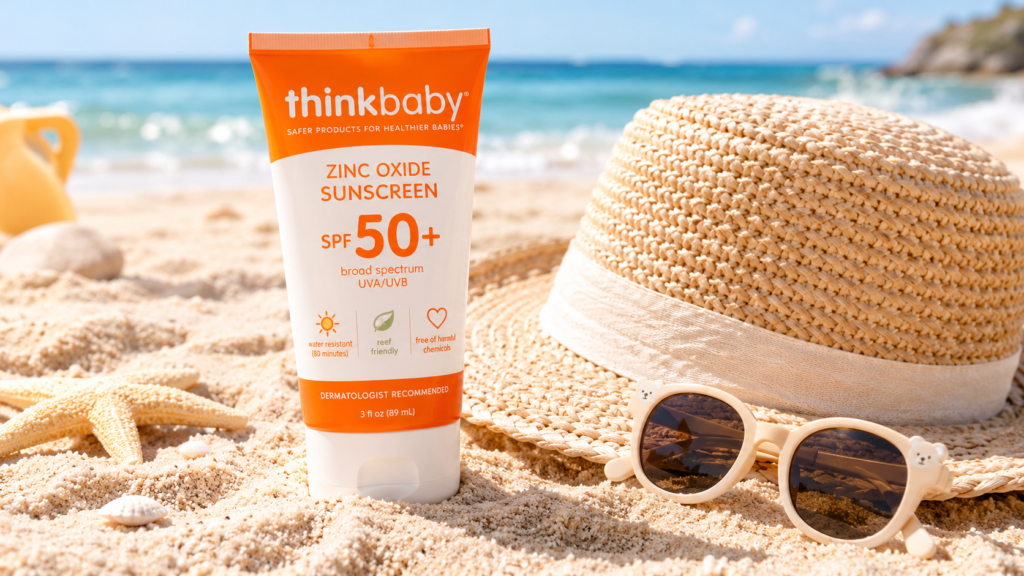
Active Ingredient: 20% Non-Nano Zinc Oxide
Best For: Active beach days, water play, and parents looking for the highest EWG safety rating.
Detailed Review
When discussing the gold standard of baby sun protection, the Thinkbaby Safe Sunscreen SPF 50+ is almost always the first product mentioned by dermatologists and veteran parents alike. It was the first sunscreen to pass Whole Foods Premium Care requirements and consistently holds a flawless “1” rating (the safest possible score) on the EWG’s Skin Deep database.
Formulated with 20% non-nano zinc oxide, Thinkbaby provides exceptional broad-spectrum protection against both UVA (aging) and UVB (burning) rays. The term “non-nano” is crucial here; it means the zinc particles are too large to penetrate the skin barrier or enter the bloodstream, ensuring the protection remains strictly on the surface.
One of the biggest complaints about mineral sunscreens is the thick, chalky consistency that is impossible to rub in. Thinkbaby has masterfully formulated this cream to be surprisingly spreadable. While it does leave a slight white cast initially (which acts as a helpful visual guide so you don’t miss a spot), it absorbs relatively well into the skin. Furthermore, it offers up to 80 minutes of water resistance, making it the perfect companion for baby pools and beach vacations. It features a very mild, pleasant papaya scent that is derived naturally, avoiding harsh synthetic fragrances.
Pros:
Top-tier safety rating from the Environmental Working Group (EWG).
Highly water-resistant for up to 80 minutes of splashing and swimming.
Applies much smoother than traditional thick zinc oxide pastes.
Reef-safe, cruelty-free, and free from parabens and phthalates.
Cons:
The slight papaya scent, while natural, might not be preferred by parents seeking 100% unscented products.
Can leave a minor white cast on darker skin tones.
👉 Click the link to check the price on Amazon
Pipette Mineral Sunscreen Broad Spectrum SPF 50
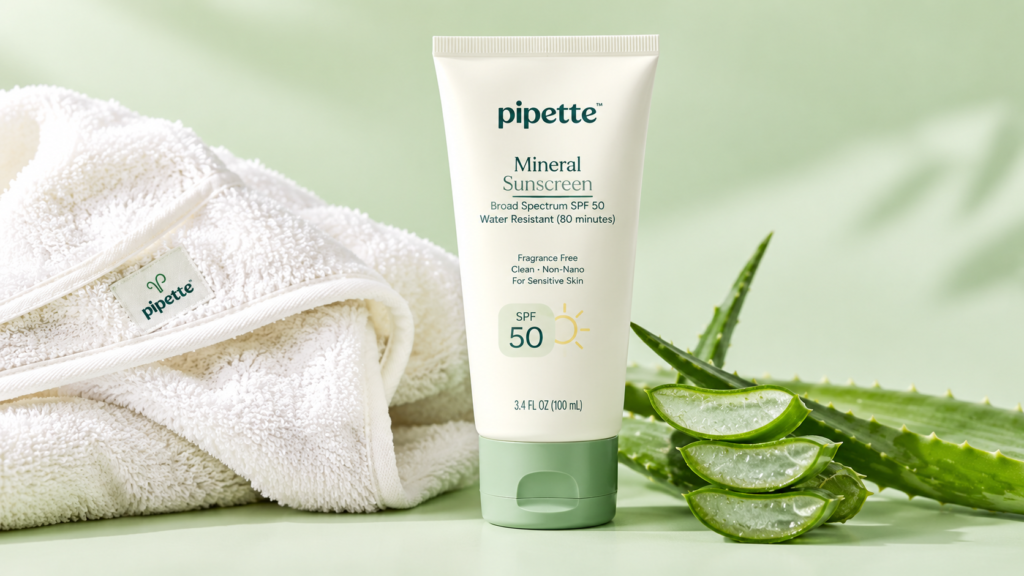
Active Ingredient: 20% Non-Nano Zinc Oxide
Best For: Everyday use, newborns (with doctor approval), and babies with severe eczema or ultra-sensitive skin.
Detailed Review
If your baby suffers from eczema, extreme dryness, or contact dermatitis, finding a sunscreen that protects without triggering a flare-up can feel impossible. Enter the Pipette Mineral Sunscreen SPF 50. Pipette has built its entire brand around clean, hypoallergenic baby care, and their sunscreen is a testament to that mission.
What makes Pipette stand out in a crowded market is its proprietary use of Squalane. Squalane is a deeply hydrating, plant-derived version of squalene (a moisturizing compound naturally found in human skin). By mixing non-nano zinc oxide with sugarcane-derived squalane and natural glycerin, Pipette has created a mineral sunscreen that doubles as a premium skin-nourishing lotion.
This formulation is a massive advantage when it comes to application. It glides onto the skin effortlessly and blends in better than almost any other 100% mineral sunscreen, virtually eliminating the dreaded white cast. It is strictly fragrance-free, pediatrician-approved, and entirely devoid of any essential oils that could irritate a compromised skin barrier. Because it is so lightweight and hydrating, many parents find themselves stealing this for their own daily facial sun protection!
Pros:
Infused with plant-derived squalane for intense, non-greasy hydration.
100% fragrance-free and hypoallergenic; exceptional for eczema-prone skin.
Blends in beautifully, leaving almost zero white cast compared to competitors.
Lightweight texture makes it ideal for everyday stroller walks and park visits.
Cons:
It does not claim high water resistance, meaning it must be reapplied immediately after sweating or water play.
The moisturizing formula can feel slightly dewy or shiny upon initial application.
👉 Click the link to check the price on Amazon
Badger Baby Active Mineral Sunscreen Cream SPF 30
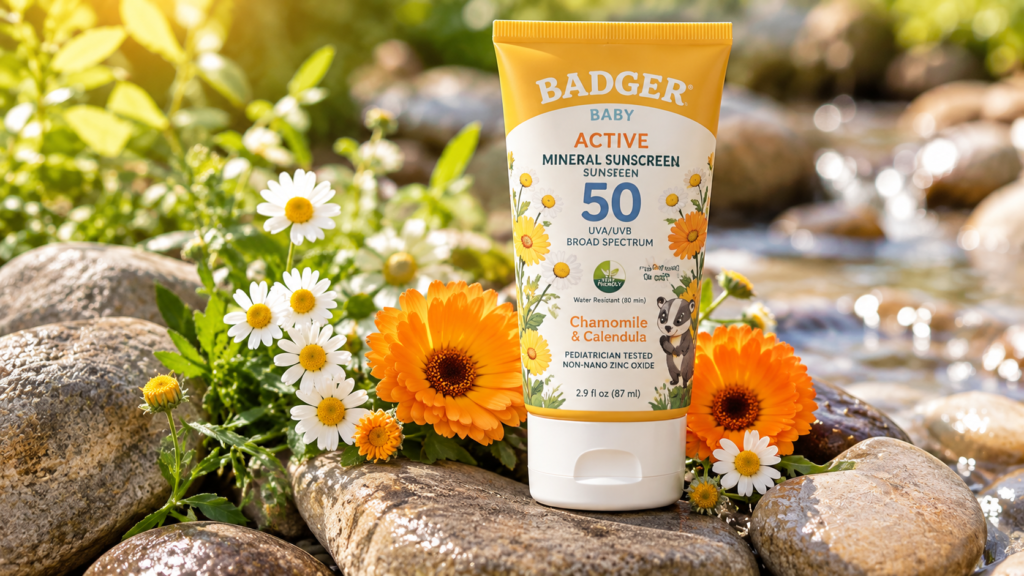
Active Ingredient: 18.75% Non-Nano Zinc Oxide
Best For: Eco-conscious parents, lovers of organic ingredients, and families seeking a simple, ultra-safe formula.
Detailed Review
In an industry filled with complicated chemical names and long ingredient lists, the Badger Baby Active Mineral Sunscreen SPF 30 is a breath of fresh air. Badger is a family-owned company famous for its uncompromising commitment to organic, natural, and environmentally sustainable skincare. Remarkably, this baby sunscreen contains only seven simple ingredients—with the primary components being organic sunflower oil, organic beeswax, and non-nano zinc oxide.
Because the formula is based on beeswax and natural oils, it creates an incredibly resilient barrier on the skin. This gives the Badger sunscreen an impressive 40 minutes of water and sweat resistance. It is also infused with organic chamomile and calendula extracts, which are naturally soothing botanical ingredients historically used to calm inflamed or irritated baby skin.
The trade-off for having such a pure, thick, beeswax-based formula is the application process. Badger sunscreen is notoriously thick and requires some “elbow grease” to rub in completely. It will leave a noticeable white cast, especially on darker skin tones. However, for parents whose top priority is avoiding synthetic additives at all costs, the peace of mind this organic shield provides is well worth the extra minute of rubbing.
Pros:
Incredibly pure formula made with 98% organic ingredients.
Chamomile and calendula naturally soothe sensitive or irritated skin.
Excellent water resistance (40 minutes) due to the protective beeswax base.
Reef-safe, cruelty-free, and packaged in a BPA-free tube.
Cons:
The thick, paste-like consistency requires significant effort to rub in.
Leaves a prominent white cast on the skin.
SPF 30 is slightly lower than the SPF 50 offered by competitors (though still highly effective).
👉 Click the link to check the price on Amazon
Blue Lizard Baby Mineral Sunscreen SPF 50+
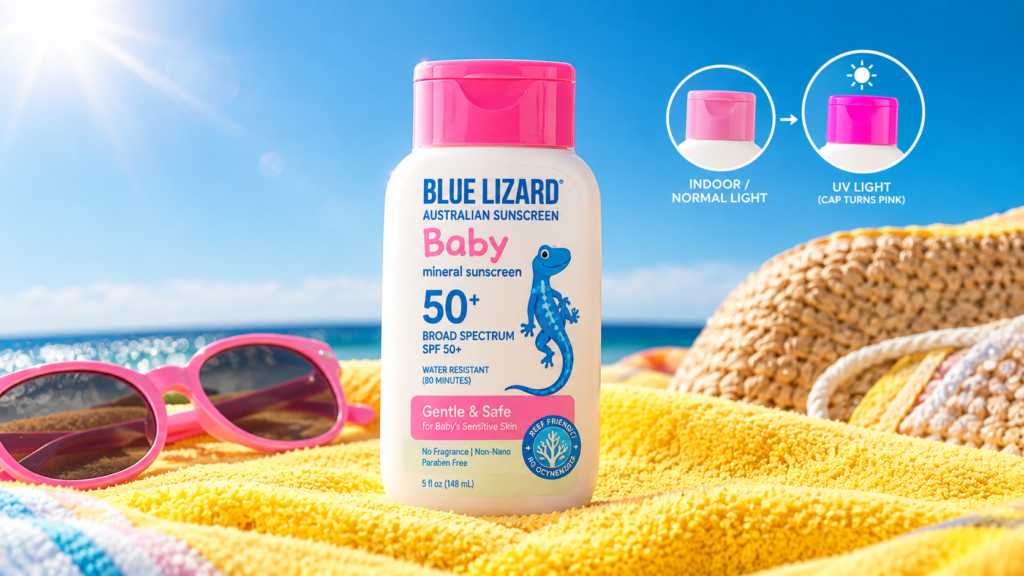
Active Ingredient: 10% Zinc Oxide, 5% Titanium Dioxide
Best For: Everyday reliable protection, easy application, and parents who need a visual reminder to apply sunscreen.
Detailed Review
Originating from Australia—a country with some of the strictest sunscreen regulations and highest UV indexes in the world—Blue Lizard Baby Mineral Sunscreen SPF 50+ is a dermatologist-trusted powerhouse. Unlike the other sunscreens on our list that rely solely on zinc oxide, Blue Lizard uses a combination of both Zinc Oxide and Titanium Dioxide to achieve a robust SPF 50+ broad-spectrum shield.
One of the most unique and beloved features of Blue Lizard sunscreens is their patented Smart Bottle technology. The plastic cap (or the entire bottle, depending on the packaging size) magically turns pink when exposed to harmful UV light. This serves as a brilliant visual cue for busy parents, instantly reminding them that if the bottle is pink, the baby needs sunscreen applied!
Formulation-wise, this sunscreen is completely free of parabens, fragrances, and active chemical absorbers like oxybenzone. It is water-resistant for up to 80 minutes, making it highly versatile for both dry park days and wet pool sessions. The consistency is surprisingly fluid and lotion-like compared to pure zinc pastes, making it very easy to spread across a squirming toddler’s limbs without excessive rubbing.
Pros:
The UV-sensitive bottle turns pink as a helpful reminder to apply sunscreen.
Combines zinc oxide and titanium dioxide for maximum broad-spectrum SPF 50+ defense.
Fluid, lotion-like texture makes application fast and easy.
80 minutes of water and sweat resistance.
Cons:
Can feel slightly greasy upon initial application before fully drying down.
While easier to spread, it still leaves a mild white hue on the skin.
👉 Click the link to check the price on Amazon
Complete Buyer’s Guide: Decoding Sunscreen Labels for Babies
Shopping for baby sunscreen can feel like reading a chemistry textbook. To ensure you are buying the safest and most effective product for your child, look for these specific terms on the label:
- Broad-Spectrum Protection
The sun emits two types of harmful rays: UVA (which causes premature aging and deep cellular damage) and UVB (which causes immediate sunburns). A sunscreen must clearly state “Broad-Spectrum” on the front label, guaranteeing that the mineral shield protects against both types of ultraviolet radiation. - Non-Nano Zinc Oxide
As discussed earlier, “non-nano” means the mineral particles are large enough that they cannot penetrate the skin barrier. Nano-particles (which are sometimes used in cosmetics to prevent a white cast) are so small they can enter the bloodstream. For babies, non-nano is the safest route to ensure the sunscreen remains entirely on the skin’s surface. - SPF 30 to SPF 50
Pediatricians recommend using a minimum of SPF 30, which blocks approximately 97% of UVB rays. SPF 50 blocks about 98%. Do not be fooled by marketing gimmicks offering “SPF 100”—the marginal increase in protection is negligible, and these ultra-high numbers often rely on a heavy dose of harsh chemicals rather than pure minerals. - Fragrance-Free vs. Unscented
Babies, particularly those with eczema, are highly susceptible to contact dermatitis caused by synthetic fragrances. Always look for “Fragrance-Free.” Note that “unscented” does not mean fragrance-free; companies sometimes use masking chemicals to hide the smell of the raw ingredients, which can still cause irritation.
Pro-Tips for Applying Mineral Sunscreen Without the Mess
Applying thick mineral sunscreen to a fussy, moving toddler is practically an Olympic sport. Use these pro-tips to make the process smoother and avoid the heavy white cast: - The “Dot and Blend” Method: Do not squeeze a giant blob into your hands and try to smear it on. Instead, squeeze a small amount and dab tiny dots all over your baby’s arms, legs, and face. Then, gently rub the dots together. This ensures even coverage and makes the thick cream much easier to blend into the skin.
- Use a Makeup Sponge: If you hate having greasy hands at the beach, or if your baby hates the feeling of being aggressively rubbed, use a dense cosmetic beauty blender (makeup sponge). The sponge effortlessly presses and blends the mineral sunscreen into the baby’s face flawlessly and gently.
- Don’t Forget the Hidden Spots: The tops of the ears, the back of the neck, the tops of the feet, and the part in their hair (if they are not wearing a hat) are the most common places babies get severe sunburns.
- Reapply Religiously: No sunscreen is truly waterproof. You must reapply every two hours, or immediately after towel-drying your baby from the pool or ocean.
Frequently Asked Questions (FAQs): Expert Answers for Cautious Parents
Can I use sunscreen on a baby under 6 months old?
The definitive answer from pediatric dermatologists is: Only as a last resort, and strictly on minimal areas.
To understand why, you must understand a newborn’s biology. An infant’s skin is drastically different from an adult’s. Their stratum corneum (the outermost protective layer of the skin) is dangerously thin, and they have not yet developed enough melanin to offer any natural defense against UV radiation. More importantly, their surface-area-to-body-weight ratio is much higher than an adult’s, meaning any chemicals or lotions applied to their skin are absorbed into their system at a much higher concentration.
For babies under 6 months, the American Academy of Pediatrics (AAP) strongly recommends complete sun avoidance as the primary strategy. You should rely on:
UPF 50+ Clothing: Long-sleeved rash guards and breathable pants.
Physical Barriers: Wide-brimmed hats with neck flaps, stroller canopies, and pop-up UV beach tents.
Timing: Keeping the baby indoors during peak UV radiation hours (typically between 10:00 AM and 4:00 PM).
The Exception to the Rule: If you find yourself in a situation where shade and protective clothing are not enough (for example, reflected UV rays from water or sand), the AAP states it is safe to apply a very small amount of a 100% mineral sunscreen (Zinc Oxide or Titanium Dioxide only). Apply it only to small, unavoidably exposed areas like the face, the tops of the ears, and the backs of the hands. Never use chemical sunscreens on a newborn.
Why is my baby’s mineral sunscreen so hard to wash off?
If you’ve ever felt frustrated trying to scrub a stubborn white paste off your baby after a long beach day, it means the sunscreen is actually doing its job perfectly!
Mineral sunscreens rely on Zinc Oxide, which is naturally hydrophobic (it repels water) and lipophilic (it binds to oils). Furthermore, brands mix these minerals with heavy, water-resistant carriers like natural beeswax, shea butter, or thick carrier oils to ensure the sunscreen doesn’t immediately wash away when your baby splashes in the pool. Therefore, standard water and mild baby body wash will simply slide right off the protective barrier.
However, leaving mineral sunscreen on overnight is a bad idea. It can trap sweat in the pores, leading to miliaria (painful heat rash) or clogged pores. To safely remove it without scrubbing and damaging your baby’s delicate skin barrier, we highly recommend the “Double Cleanse Method”:
- The Oil Phase: Before putting your baby in the bath, massage a generous amount of baby-safe oil (such as pure coconut oil, sweet almond oil, or a dedicated baby cleansing oil) directly onto their dry skin. Gently rub it in circular motions. The oil will instantly bind to the Zinc Oxide and melt it down.
- The Wash Phase: Take a warm, damp washcloth and softly wipe the oil away. Follow up with your regular, tear-free baby wash and warm water to remove any remaining residue. Your baby’s skin will be perfectly clean and deeply moisturized!
Does mineral sunscreen expire?
Yes, absolutely. A common misconception is that because the active ingredient is a natural mineral (like ground-up zinc rock), it will last forever. While the zinc itself doesn’t expire, the inactive ingredients (the lotions, oils, and emulsifiers that hold the cream together) absolutely do.
The FDA classifies sunscreens as over-the-counter (OTC) drugs and mandates that they remain fully stable and effective for three years from their manufacturing date. Always check the crimp of the tube or the bottom of the bottle for the expiration date.
Warning Signs Your Sunscreen Has Gone Bad:
Even if the expiration date hasn’t passed, poor storage can ruin a sunscreen. Leaving a tube inside a sweltering car or a hot beach bag can cause the formula to degrade rapidly. Throw the sunscreen in the trash immediately if you notice:
Separation: You squeeze the tube and a watery, oily liquid shoots out, followed by chalky clumps. This means the emulsion has broken, and the zinc is no longer evenly distributed, offering zero protection.
Texture Changes: The cream feels gritty, sandy, or refuses to blend into the skin.
Foul Odor: It smells rancid, sour, or heavily chemical, indicating the natural carrier oils have spoiled.
Conclusion:
Navigating the world of baby skincare can feel overwhelming, but choosing the right sunscreen is a monumental decision for your child’s long-term health. It is about so much more than preventing a temporary, painful sunburn for the weekend. Pediatric and dermatological studies consistently warn that severe sun damage during infancy significantly increases the risk of serious skin complications, including melanoma, later in life.
By avoiding controversial chemical absorbers (like oxybenzone and avobenzone) and opting for a high-quality, pediatrician-approved mineral sunscreen, you are taking a proactive step. You are placing a safe, physical, non-toxic shield between your child’s highly vulnerable, developing body and the sun’s harsh rays.
The modern baby gear market has evolved beautifully, meaning you no longer have to settle for thick, unblendable white pastes:
If you need heavy-duty, water-resistant protection for a family beach trip, Thinkbaby is your ultimate, EWG-certified safeguard.
If your baby struggles with eczema or hyper-sensitive skin, the squalane-infused, ultra-hydrating touch of Pipette is a gentle miracle worker.
For parents who demand strictly organic, minimalist ingredients, Badger offers unmatched natural simplicity.
And for those who need a foolproof visual reminder, the color-changing smart bottle of Blue Lizard is a brilliant addition to any diaper bag.
Making the switch to premium mineral protection is a non-negotiable investment in your baby’s wellness. Do not wait until the morning of your beach trip to realize you only have chemical sunscreen in the house.
Stock your nursery, pack your beach bag with confidence, and let your little one safely explore the sunshine!
👉 Click the link to check the price on Amazon
I hope I have answered all of your questions about this topic. Thank you for taking the time to read our article!